
Skip to content

SkyDeck Labs

A studio built to ship

We handle everything from your first call to a system live in production, then stay on for support after launch.

SkyDeck Labs is a small senior team. You work with the people writing the code, not an account layer in front of them. Every build ships with tests, documentation, and a handover that makes sense six months later.


Professional workstation setup at our software studio
A SkyDeck Labs engineer actively developing software
150+
Projects delivered
50+
Clients served
5+
Years building

What we build

Six disciplines, one team. Most projects use three or four of them together.

Web Development

Product interfaces, dashboards, and marketing sites in Next.js and React. Server rendered, fast on real hardware, accessible by default.

  • Next.js
  • React
  • TypeScript
  • Tailwind
Engineering modern web applications and user interfaces

Mobile Development

Cross platform iOS and Android apps on Expo and React Native, with offline first sync so the app works before the network does.

  • Expo
  • React Native
  • Supabase

Data and Analytics

Pipelines, warehouses, and the dashboards on top of them, so the numbers your team argues about all come from one place.

  • Python
  • Pandas
  • SQL

AI and Machine Learning

Retrieval pipelines over your own documents, computer vision, and forecasting models. Built to be explainable, not a black box.

  • LangChain
  • FAISS
  • TensorFlow
  • XGBoost
  • SHAP
Developing artificial intelligence and machine learning models

Backend and APIs

Services that stay correct under load, not just fast. Double entry ledgers, idempotent writes, event driven pipelines, and REST or gRPC contracts.

  • Go
  • Java
  • C#
  • Node
  • PostgreSQL
  • Kafka
Architecting robust backend systems and resilient APIs

Cloud and DevOps

One command to run the whole stack locally, and a pipeline that ships the same containers to production without surprises.

  • Docker
  • Kubernetes
  • Terraform
  • GitHub Actions
Managing scalable cloud infrastructure and deployment pipelines

Our tech stack

Key technologies and platforms

We pick the right tool for the problem, not whatever is trending. The stack below is what we reach for first, and we will work inside yours if it already fits.

  • TypeScript
  • Java
  • SQL
  • Vue
  • Redux Toolkit
  • Go / gRPC
  • Laravel
  • LangChain
  • scikit-learn
  • SHAP
  • MySQL
  • Redis
  • Kubernetes
  • Nginx
  • TypeScript
  • Java
  • SQL
  • Vue
  • Redux Toolkit
  • Go / gRPC
  • Laravel
  • LangChain
  • scikit-learn
  • SHAP
  • MySQL
  • Redis
  • Kubernetes
  • Nginx
  • Python
  • C#
  • Next.js
  • Tailwind CSS
  • Zod
  • Spring Boot
  • FastAPI
  • FAISS
  • XGBoost
  • OpenCV
  • SQL Server
  • Kafka / Redpanda
  • Terraform
  • AWS
  • Python
  • C#
  • Next.js
  • Tailwind CSS
  • Zod
  • Spring Boot
  • FastAPI
  • FAISS
  • XGBoost
  • OpenCV
  • SQL Server
  • Kafka / Redpanda
  • Terraform
  • AWS
  • Go
  • PHP
  • React
  • Motion
  • Node
  • ASP.NET Core
  • Flask
  • TensorFlow
  • Optuna
  • PostgreSQL
  • Supabase
  • Docker
  • GitHub Actions
  • Vercel
  • Go
  • PHP
  • React
  • Motion
  • Node
  • ASP.NET Core
  • Flask
  • TensorFlow
  • Optuna
  • PostgreSQL
  • Supabase
  • Docker
  • GitHub Actions
  • Vercel

Selected work

Three builds that show the range: hard backend systems, applied AI, and interface craft.
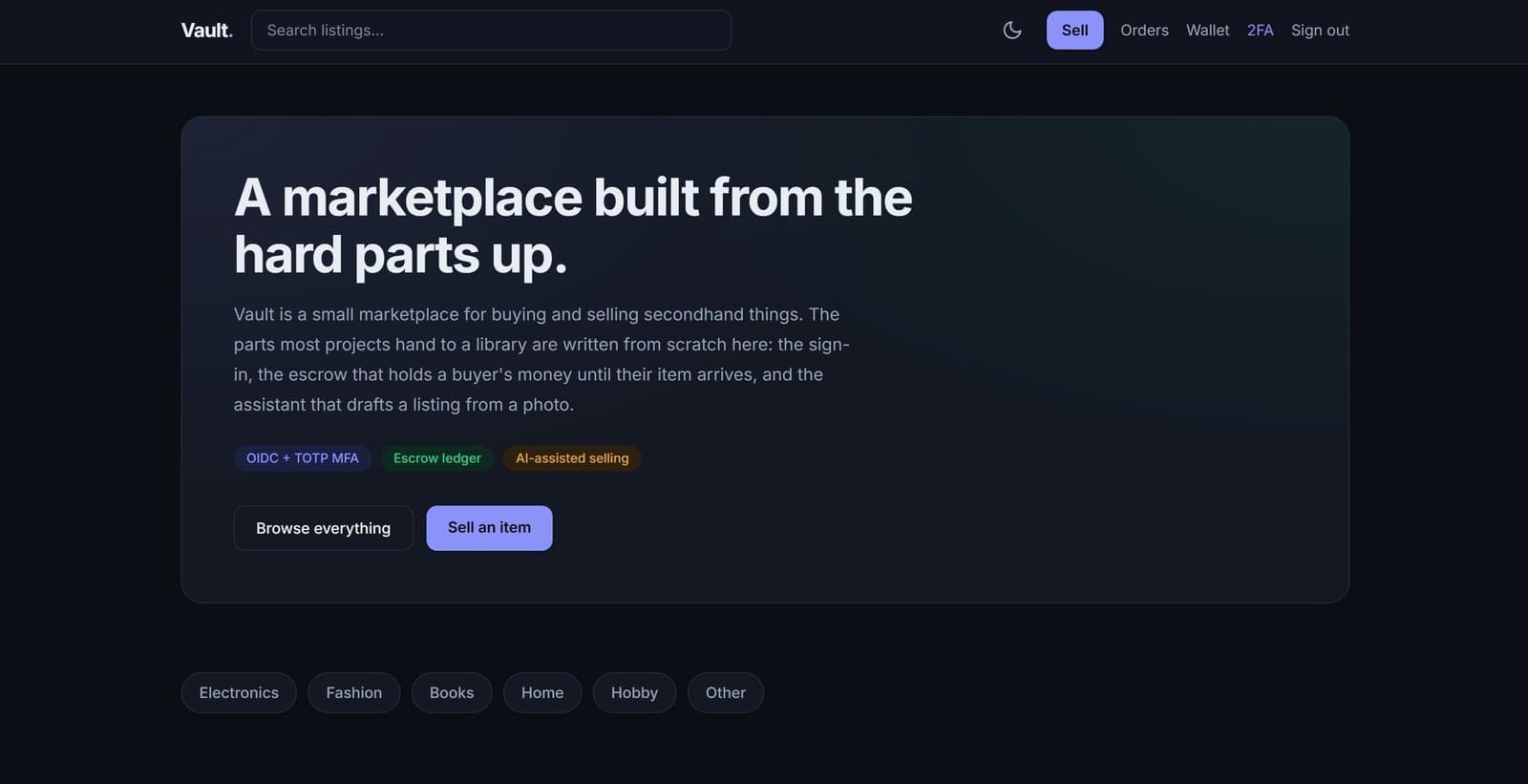
Vault marketplace storefront with escrow and AI listing features

Vault

Identity, payments, distributed systems, 2026

A C2C marketplace built around its hardest parts: an OAuth 2.0 and OIDC provider written from the RFCs, an escrow checkout on a double entry ledger, and an AI listing assistant.
  • Go
  • PostgreSQL
  • Next.js
  • Redpanda
  • FastAPI
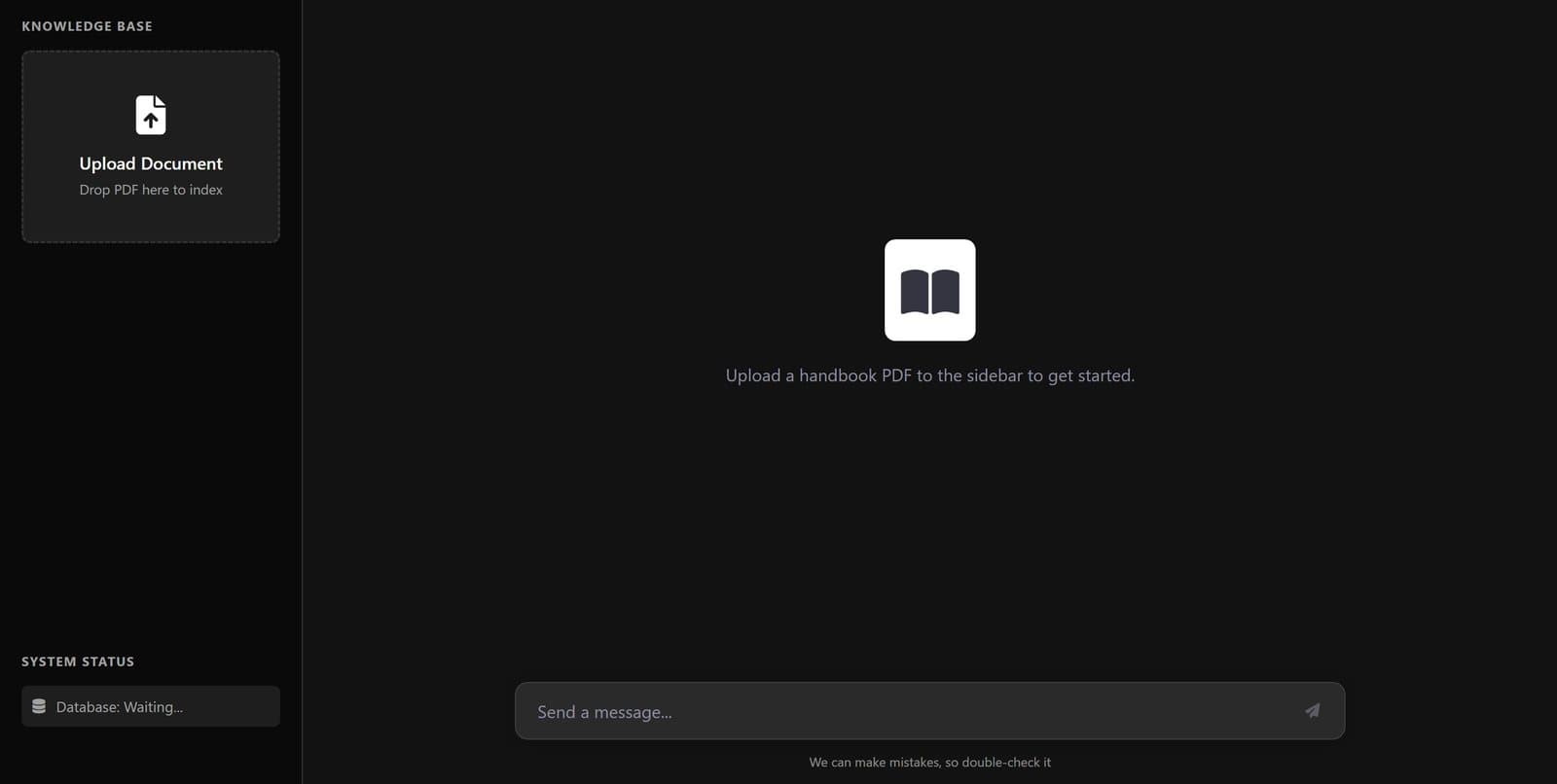
FaQ Assistant document chat interface

FaQ Assistant

Generative AI and RAG, 2025

Upload a PDF and ask it questions. Local embeddings and a FAISS index return exact source excerpts, so answers stay grounded in the document.
  • LangChain
  • FAISS
  • HuggingFace
  • Flask
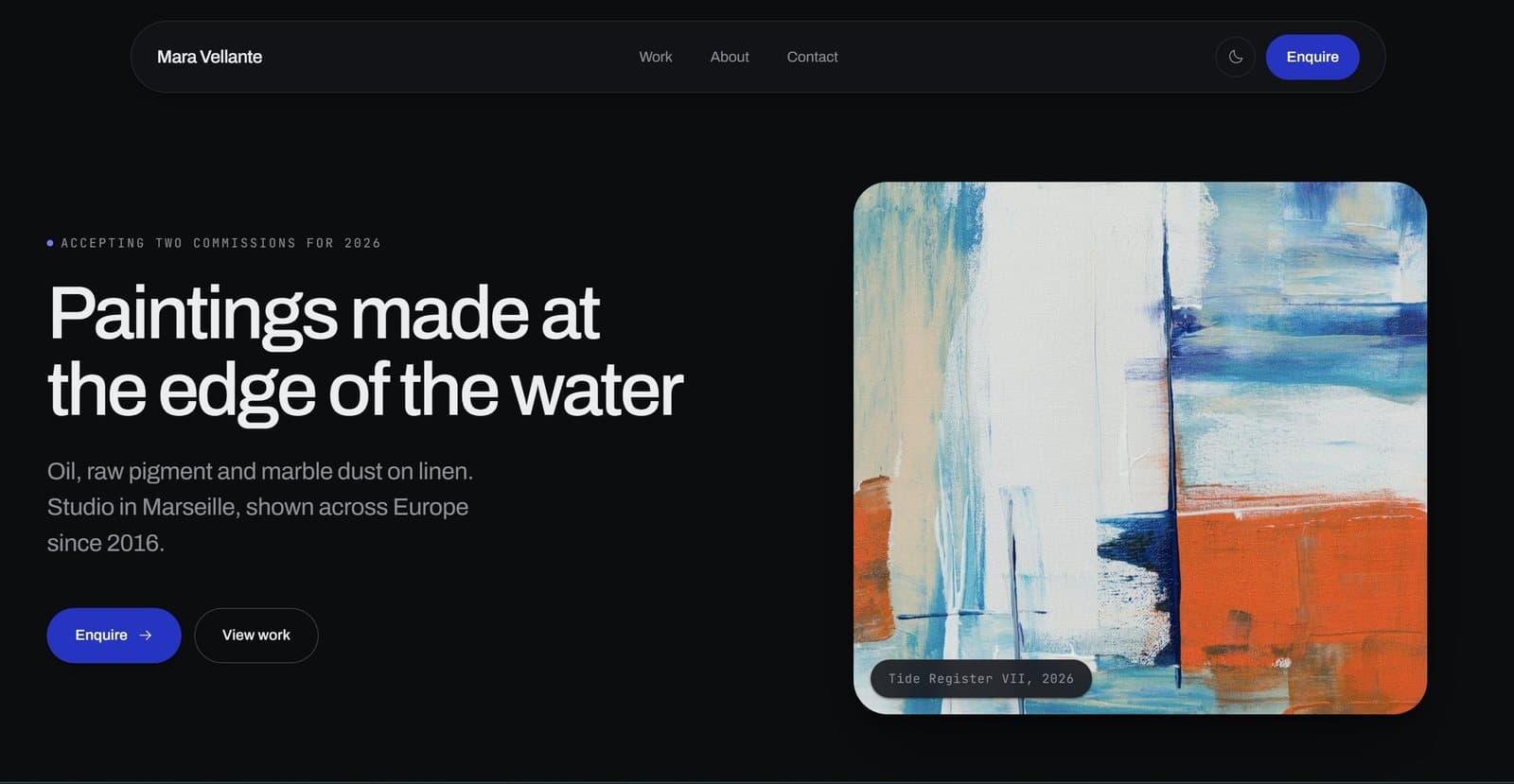
Maravellante painter portfolio hero with a floating pill navigation

Maravellante

Frontend engineering and design systems, 2025

A gallery style portfolio for a contemporary painter, built dependency free: a pointer tracked pill nav, magnetic buttons, 3D tilt on artwork cards, and a full light and dark design system.

  • HTML5
  • CSS3
  • JavaScript
  • View Transitions

How a build runs

Four stages, each ending in something you can read, click, or deploy.

  1. Collaborative project discovery and technical scoping
    01

    Discovery

    We map what you actually need, what already exists, and what can be cut. You get a written scope and a fixed estimate before anything is built.

  2. Designing the core software architecture and system boundaries
    02

    Architecture

    Data model, service boundaries, and the failure cases up front. Decisions are written down so nobody relitigates them in month three.

  3. Active software engineering and continuous development
    03

    Build

    Weekly demos against a running environment. You see real software every week, not a status document describing one.

  4. Deploying the software and monitoring live system health
    04

    Ship and support

    Deployment, monitoring, and a handover your own team can read. We stay on afterwards for as long as you need us.

What clients say

Three of the teams we have shipped for.

They rebuilt our checkout in six weeks and it has not dropped an order since.
Imran QureshiOperations Director, Meridian Freight
We asked for a dashboard and got an argument about our data model first. That conversation saved us a year of cleanup.
Andrea SalvattiHead of Product, Kestrel Analytics
Their retrieval tool answers policy questions from our own documents, source paragraph attached.
Nadia RahmanFounder, Corva Legal

Common questions

If yours is not here, message us on Upwork and you will get a straight answer.

What does a typical engagement cost?
Most projects are fixed price against a written scope. A marketing site or landing page starts around a few thousand dollars, a full product build runs higher. You get the number before work starts, not after.
How long does a build take?
A marketing site is two to four weeks. A product with authentication, payments, and an admin side is usually two to four months. AI work depends on your data, so discovery comes first.
Do you work with existing codebases?
Yes. A good share of our work is taking over something half built or inherited. We start with a short audit so you know what is salvageable before committing to a rewrite.
Who owns the code?
You do, from the first commit. Everything lives in your repository, on your accounts, under a licence you control. There is no lock in and no hosting we hold hostage.
What happens after launch?
We offer ongoing support covering monitoring, security patches, dependency updates, and feature work. If you would rather run it in house, the handover is written for that.
Can you build AI features into a product we already have?
Usually yes. Retrieval over your own documents, classification, and forecasting all sit alongside an existing stack. We are honest when a simpler approach beats a model.